
Nature persists through a culture of resistance in Kalinga

In Kalinga, a mountainous province in the North of the Philippines, an indigenous culture of resistance has safeguarded critical naturescapes since time immemorial.
Covered by the 265,487-hectare North Central Cordillera biodiversity corridor, Kalinga’s landscapes are home to at least 319 floral and 150 faunal species, and headwaters to a broader watershed area that nurture pine, tropical, and mossy forests and irrigate heritage rice terraces and other agricultural lands.

At present, only 8% of the North Central Cordillera is covered by government designated Protected Areas.
The rest is de facto safeguarded by indigenous territories.

The Legal Rights and Natural Resources Center (LRC) co-organized with local indigenous groups a province-wide landscape dialogue last April 23, 2026 in Tabuk City to advocate for the rights of indigenous environmental defenders who continue to protect their lands and all life rooted in it.
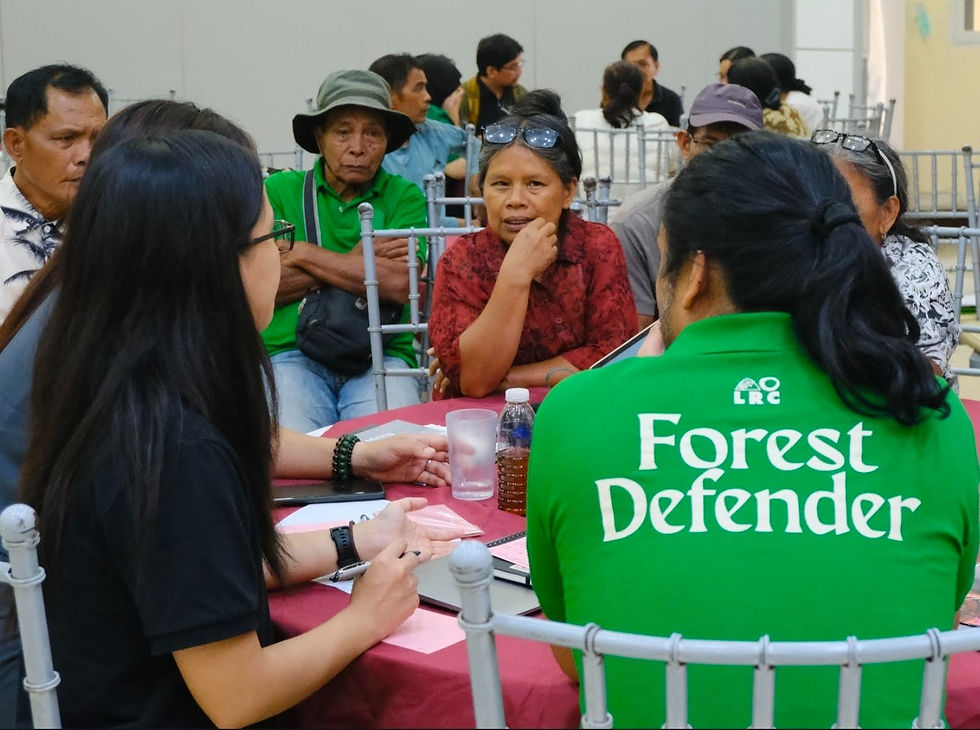
Participated in by indigenous communities and movements, local government officials, church and other civil society groups, and academe, the dialogue was part of the Center’s ongoing feminist participatory action research that aimed to articulate the lived realities, aspirations, and actions of defenders in the face of violence driven by emerging false climate solutions.
Despite enduring customary traditions such as the Bodong peace pacts that galvanized intertribal anti-dam resistance during the Marcos dictatorship, indigenous lands in Kalinga are now increasingly besieged by proposed hydro, wind, and geothermal power projects; critical minerals mining such as copper-gold; and prospective forest carbon projects.

In the face of development paradigms that widen the rift between humanity and nature, Beatrice Belen, a 55 year-old Indigenous woman leader of the Uma tribe, asked participants in the dialogue:
“Pwede bang alamin ng mga taga-gobyerno at mga taga-unibersidad kung ano ang kahalagahan ng pera at kahalagahan ng kalikasan? Kaming mga Indigenous People alam namin ito, kaya nga pinagtatanggol namin ang kalikasan.”
(“Can the government and university officials learn what is the value of money, and the value of Nature? We Indigenous Peoples know this, hence why we protect Nature.”)

The challenge to better heed the murmurs of the land did not fall on deaf ears. Towards the end of the dialogue, participating public officials, civic leaders, and academe committed to greater cooperation with indigenous communities in culture-based governance, protection policies for defenders, and various other strategies for ecological advocacy.
Indeed, indigenous voices, when heard, can move mountains.


I found the clean structure refreshing because it gave the post a more polished feel. It gave a clean impression and felt genuine.
situs slot
The site’s approach to casual storytelling and daily observations makes it a pleasant alternative to heavier literary platforms when you want something lighter.
The clear direction here felt clean and straightforward, which helped the post feel more thoughtful. It felt well written while keeping things clear. wedding packages melbourne
This write up gave a smooth reading experience because the flow gave the content a neat flow. It made the article better and stayed useful. school landscaping melbourne
I appreciated the helpful detail here because it felt warm and easy to read, which kept the writing natural. It felt balanced overall while staying focused. muslim wedding venue melbourne